2026 Top Trends in Transport Overseas for Efficient Global Logistics?
As the world continues to evolve, transport overseas faces new challenges and opportunities. The logistics landscape is rapidly changing. Companies must adapt to stay competitive. Innovations in technology and shifts in demand dictate this evolution.
Transport overseas often struggles with complexities. Rising costs, fluctuating fuel prices, and regulatory hurdles repeatedly emerge. Additionally, global events can disrupt even the best-laid plans. Companies need to consider these uncertainties. Identifying trends can prepare logistics professionals for future challenges.
The focus now is on efficiency. Sustainable practices are becoming crucial for transport overseas. Cost-effective solutions can lead to significant savings. Companies must rethink their strategies to address customer needs and environmental concerns. This changing paradigm requires both flexibility and forward-thinking. By embracing new trends, businesses can optimize their global logistics efforts. The next few years will shape the future of transport overseas dramatically.

Emerging Technologies Transforming Global Transport in 2026
The logistics landscape is evolving rapidly. Emerging technologies are at the forefront of this transformation. In 2026, we will see innovations reshaping transportation on a global scale. Automation and artificial intelligence are making processes more efficient. Drones may deliver packages faster than ever before. However, there are still questions about their reliability. Are they safe enough for urban areas?
Sustainability is also a critical focus. Electric and hybrid vehicles are becoming commonplace. Yet, the infrastructure for charging is still lagging behind. Many regions may struggle to adopt these greener technologies. Blockchain technology offers transparency in supply chains. But its implementation can be complex and time-consuming, often needing extensive training.
In addition, data sharing across networks can improve overall efficiency. The concept of smart logistics is indeed promising. Yet there are concerns about data privacy and security. As different systems need to integrate, challenges will inevitably arise. This can lead to confusion and delays. The future of global transport is bright, but hurdles remain that must be addressed.
2026 Top Trends in Transport Overseas for Efficient Global Logistics
| Trend |
Description |
Impact on Logistics |
Emerging Technologies |
| Autonomous Vehicles |
Growing use of self-driving trucks and drones for deliveries. |
Increased efficiency and reduced labor costs. |
AI, Robotics |
| Blockchain Technology |
Enhancing transparency and security in supply chain transactions. |
Reduction in fraud and dispute resolution time. |
Distributed Ledger Technology |
| IoT Integration |
Utilizing smart sensors for real-time tracking and monitoring. |
Enhanced decision-making capabilities. |
Smart Devices, Connectivity |
| Green Logistics |
Adoption of eco-friendly practices and fuels. |
Reduction of carbon footprint and operational costs. |
Renewable Energy, Electric Vehicles |
| Data Analytics |
Leveraging big data for demand forecasting and route optimization. |
Improved service levels and reduced costs. |
Machine Learning, Predictive Analysis |
Impact of AI and Automation on Logistics Efficiency Worldwide
The rise of AI and automation is reshaping logistics on a global scale. According to a report by McKinsey, companies adopting AI can boost supply chain efficiency by up to 50%. The impact is significant. Automated warehouses handle inventory faster, reducing operational costs and time delays. AI-driven analytics help in forecasting demand accurately, optimizing routes, and minimizing fuel consumption.
However, the transition is not without challenges. Many companies struggle with integrating new technologies. A survey from Deloitte reveals that only 45% of logistics firms are ready to invest in AI and automation. There’s still a fear of job losses, which can lead to resistance among staff. Training and upskilling are crucial to ensure employees adapt to automated systems.
Moreover, relying solely on technology may lead to vulnerabilities. A reliance on algorithms might overlook the human factor in logistics. Understanding local nuances is essential for effective operation. The road ahead demands a balanced approach, combining innovation with human insight. Companies must reflect on how to harness AI responsibly, ensuring efficiency while maintaining a robust workforce.
Sustainable Transport Solutions Shaping the Future of Global Shipping
Sustainable transport solutions are pivotal for the future of global shipping. According to the International Maritime Organization, shipping accounts for about 2.5% of global greenhouse gas emissions. This figure is alarming and prompts immediate action. Transitioning to greener technologies is no longer optional.
Innovative approaches are emerging. Electric and hydrogen-powered vessels are being tested. These alternatives could significantly cut emissions. A recent report by McKinsey suggests that if these technologies are widely adopted, emissions could decrease by 30% by 2030. However, challenges remain. Infrastructure needs updating. Ports must accommodate these new vessels, which costs time and money.
Equally important is the integration of sustainable practices in logistics. Smart routing and load optimization can reduce fuel consumption. A study indicates that effective route planning can cut shipping costs by up to 15%. Companies must embrace these strategies or fall behind. The path to sustainable transport is fraught with obstacles. Continuous innovation and collaboration in the industry are essential for meaningful progress.
The Role of Blockchain in Enhancing Supply Chain Transparency in 2026
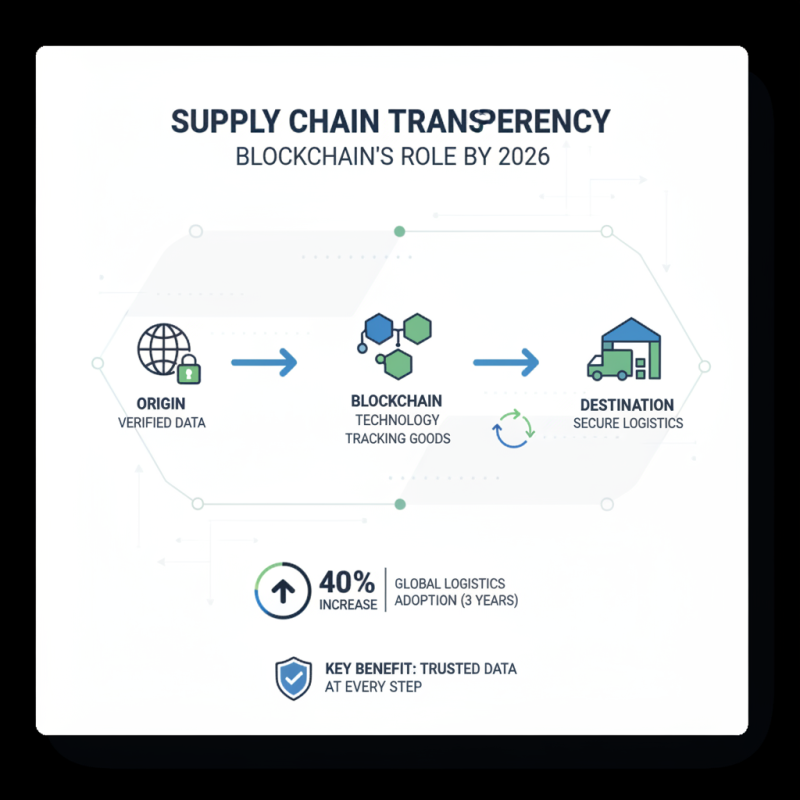
In 2026, blockchain will play a pivotal role in supply chain transparency. This technology aids in tracking goods from origin to destination. According to a recent industry report, blockchain adoption is expected to increase by 40% within global logistics over the next three years. This surge emphasizes the need for verified data at every step of the supply chain.
The integration of blockchain ensures authenticity in transactions. Smart contracts further enhance efficiency by automating processes. A study found that companies using blockchain can reduce operational costs by up to 15%. However, challenges remain. Implementation costs can be high, especially for small businesses. Not all stakeholders may share the same commitment to transparency, creating potential friction.
Moreover, real-time data sharing can lead to complications. Human errors during data entry could compromise the entire system. While blockchain offers promise, it is not foolproof. Striking a balance between transparency and security will be critical. The journey toward an entirely transparent supply chain is far from complete, requiring ongoing collaboration and innovation.
New Regulatory Frameworks Affecting International Transport Practices
The landscape of international transport is evolving rapidly. New regulatory frameworks are reshaping logistics practices. A recent report by the International Maritime Organization indicates that compliance costs are expected to rise by 20% over the next five years. This shift demands adaptability from logistics providers.
In 2026, stricter environmental regulations will impact shipping routes. Carbon tariffs could change cost structures significantly. Last year, data revealed that over 70% of logistics firms are unprepared for these changes. Companies must reassess their strategies. Is your team ready for the shift?
**Tip:** Monitor regulatory updates closely. Engage with industry forums to stay informed.
Emerging technologies are also influencing international transport regulations. Automation is key in adapting to new standards. However, reliance on technology poses risks, such as cybersecurity threats. As logistics increasingly relies on digital solutions, vulnerabilities can arise. Industry experts suggest a cautious approach.
**Tip:** Invest in cybersecurity training. A well-informed team can mitigate potential risks.