How to Choose the Right Transport Broker for Your Needs?
Choosing the right transport broker can significantly impact your logistics efficiency. In a market where 70% of shipments rely on third-party logistics, the stakes are high. A suitable transport broker not only ensures timely deliveries but also optimizes costs. According to a report by the Freight Transportation Research Institute, businesses using adept brokers save up to 15% on shipping expenses.
Industry expert Mark Johnson states, “The right transport broker elevates your logistics from reactive to proactive.” This insight underlines the importance of selecting a broker who understands your unique needs. Many companies overlook the significance of this choice. A mismatch can lead to delays and increased costs, creating unnecessary stress in supply chains.
When searching for a transport broker, consider experience, reliability, and customer service. Not every broker fits every business. Reflect on previous partnerships and ask yourself, did they meet your expectations? A thoughtful evaluation is essential to avoid common pitfalls. Making a well-informed decision can turn your logistics challenges into a streamlined operation.

Understanding the Role of Transport Brokers in Freight Management
Transport brokers play a crucial role in freight management. They act as intermediaries between shippers and carriers. This relationship streamlines the shipping process, saving both time and resources. Brokers have access to a wide network of carriers. They can help shippers find the best match for their specific transportation needs.
Using a transport broker can simplify logistics. They handle negotiations, paperwork, and tracking. However, not all brokers are created equal. It's essential to evaluate their experience and reliability. Poor communication from a broker can lead to delays. Additionally, shippers might face unexpected costs if they choose a broker without thorough research.
Transparency is key in this industry. A broker should provide clear information about rates and services. This helps shippers make informed decisions. However, it is important to question their recommendations. Sometimes, brokers may prioritize their profits over the best shipper-client match. Choosing the right transport broker requires careful consideration of these factors.
Assessing Your Shipping Needs: Volume, Frequency, and Type of Goods
Choosing the right transport broker begins with understanding your shipping needs. Consider the volume of goods you need to transport. Is it a small batch or large shipments? A broker experienced with your shipment size can make a difference. If you frequently ship, look for a broker who offers tailored solutions. They can provide consistent service and better rates over time.
Next, think about the type of goods you'll be shipping. Are they fragile, perishable, or bulky? Not all brokers handle specialized items well. You'll want a broker who understands the specific requirements your products need. For instance, perishable goods may need temperature-controlled transit. This necessitates a broker with proper facilities and vehicles.
Shipping frequency also plays a critical role. If your shipments are irregular, a flexible broker is essential. However, regular shipments might benefit from a broker with contracts to ensure pricing stability. Reflecting on these factors can help you avoid potential pitfalls. A broker who can't accommodate your unique needs may lead to delays or increased costs. Balancing these factors is key to making an informed choice.
Evaluating Broker Credentials: Industry Certifications and Experience
When selecting a transport broker, examine their credentials closely. Industry certifications can indicate a broker’s professionalism and reliability. Look for common certifications that reflect knowledge and understanding of transport logistics. These certifications usually require rigorous training and must be renewed periodically. Brokers with these credentials are often more trustworthy.
Experience is another vital aspect. Consider how long the broker has been in the industry. A broker with several years of experience is likely to have encountered various challenges. This experience can translate into effective problem-solving skills. Ask for references from previous clients to gauge their satisfaction. It’s okay if their track record isn’t perfect; every broker may face difficulties in their career.
Evaluate their response to issues as well. A broker should be transparent about past challenges and how they overcame them. This honesty can build trust and set realistic expectations. After all, transport logistics can be unpredictable. It's essential to find a broker who can adapt and communicate effectively during tough times.
How to Choose the Right Transport Broker for Your Needs?
| Criteria |
Description |
Importance Level |
| Industry Certifications |
Look for certifications like FMC, TIA, or similar which indicate formal recognition. |
High |
| Years of Experience |
Evaluate the broker's time in the industry to gauge reliability. |
High |
| Client References |
Ask for references from previous clients to assess performance and trustworthiness. |
Medium |
| Range of Services |
Ensure they offer the types of transportation services you require. |
Medium |
| Technology Adoption |
Check if they use up-to-date tracking and management technologies. |
High |
| Insurance Coverage |
Confirm they have adequate insurance to cover potential liabilities. |
High |
| Pricing Structure |
Review their pricing models and ensure they fit within your budget. |
Medium |
Comparing Broker Fees: Understanding Pricing Structures and Hidden Costs
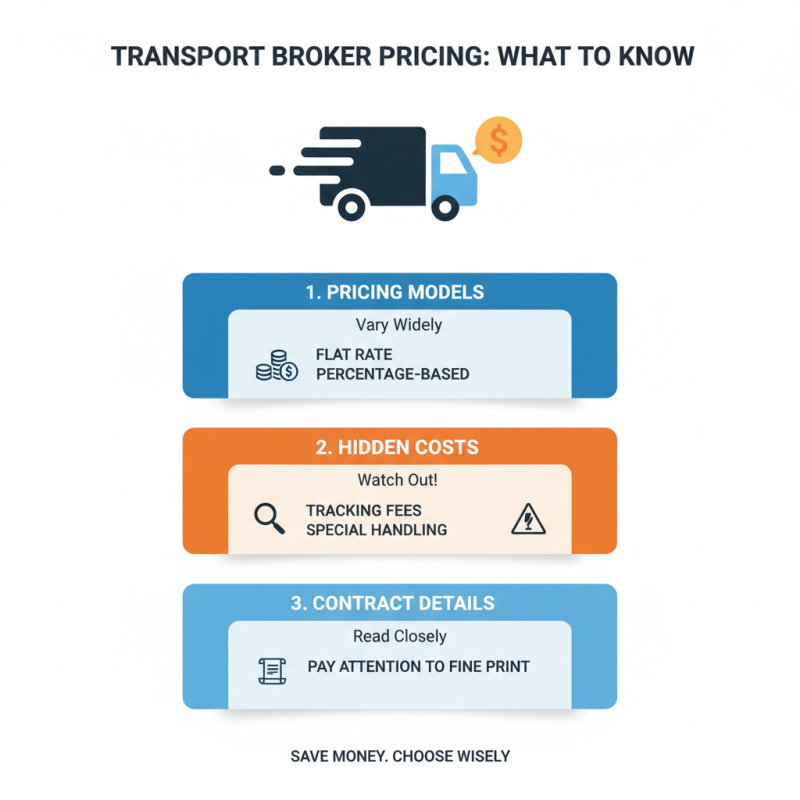
When selecting a transport broker, understanding their pricing structure is crucial. Fees can vary widely among brokers. Some charge a flat rate, while others operate on a percentage basis. Hidden costs can sneak in too. For example, additional fees for tracking or special handling can add up quickly. Pay close attention to the fine print in contracts.
**Tip:** Always request a full breakdown of fees. This can help you identify potential hidden costs. A broker might appear affordable but could charge for services that others include.
Another aspect to consider is the broker’s experience. A novice broker may offer lower fees to attract clients. However, they might not have the expertise to navigate challenges effectively. This could lead to delays or disruptions. A seasoned broker typically understands the nuances of the industry.
**Tip:** Consider asking for references. Previous clients can provide valuable insights into the broker's pricing and reliability. You want someone who balances cost with competency. Avoid brokers who cannot explain their charges clearly. Transparency is key in building trust.
Pricing structures are essential, but don’t forget customer service. Sometimes, brokers with higher fees offer better support. Evaluate what matters most to you. Balancing cost with service quality is critical for a smooth transport experience.
Leveraging Technology: Tools for Real-Time Tracking and Communication
In today's logistics landscape, technology plays a vital role in enhancing communication and tracking. Real-time tracking has become a necessity. According to a recent industry report, 75% of supply chain managers heavily rely on tracking tools. These tools provide instant updates on shipment locations. Fast communication helps address issues promptly. However, not all brokers utilize these technologies effectively.
Many brokers claim to offer advanced tracking, but they often lack the necessary infrastructure. A survey showed that only 60% of brokers provide real-time data. This gap can lead to inefficiencies. Customers may feel frustrated when they cannot find accurate shipment statuses. Additionally, brokers should foster better communication with clients. Regular updates can build trust and transparency.
The absence of reliable tracking tools can hinder business operations. A report from the National Shippers' Strategic Transportation Council highlighted that inefficiencies cost U.S. companies over $73 billion annually. On the other hand, brokers who invest in technology can gain a competitive edge. Yet, it’s important to assess their capacity to deliver on promises. Technology should simplify processes, not complicate them.
Real-Time Tracking Technologies in Transport Brokerage