Why is International Transport Essential for Global Trade?
International transport plays a crucial role in facilitating global trade. According to Dr. Emily Harper, an expert in logistics, “Without effective international transport, trade would grind to a halt.” This statement highlights the interconnectedness of economies worldwide. Goods produced in one country often travel thousands of miles to reach consumers in another.
Each shipment tells a story of coordination and complexity. Consider electronics made in Asia, traveling to North America or Europe. These products rely heavily on efficient international transport systems. Yet, challenges remain. Delays, customs issues, and rising fuel costs can disrupt supply chains.
Reflecting on these dynamics, one can appreciate the importance of innovation in international transport. Solutions like digital tracking and sustainable shipping methods are vital. Still, the question lingers: are we doing enough? The future of global trade depends on continuous improvement in international transport.
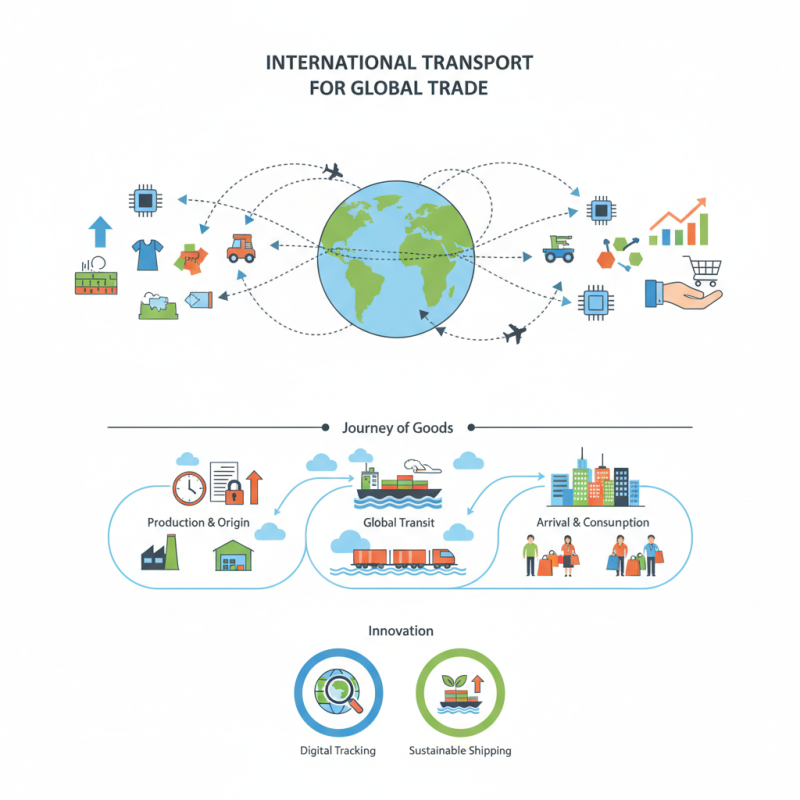
The Role of International Transport in Facilitating Global Trade
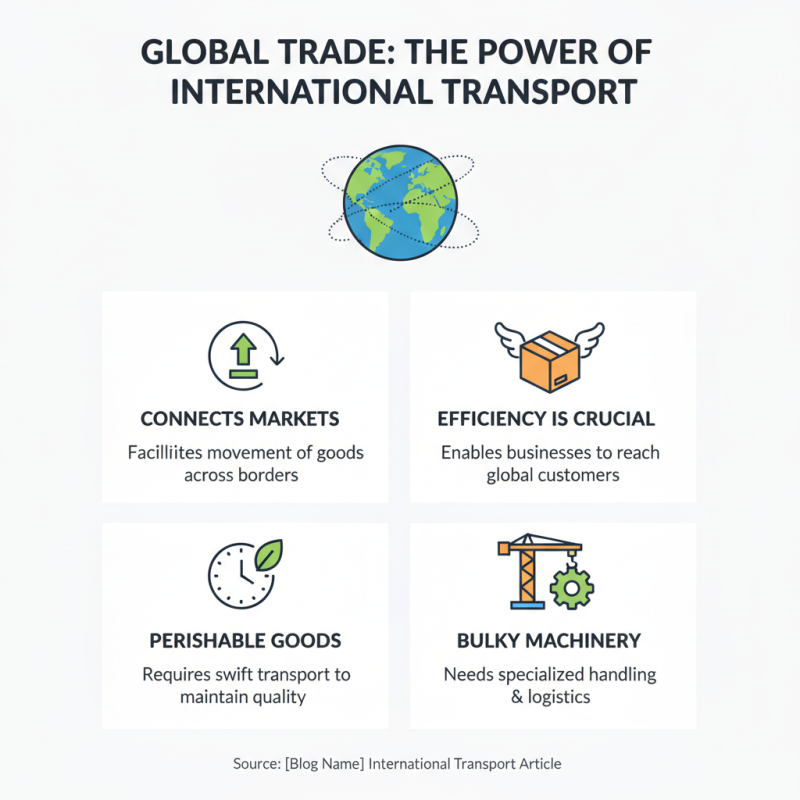
International transport plays a vital role in global trade. It connects markets and facilitates the movement of goods across borders. Without efficient transport, businesses struggle to reach customers in different regions. For instance, perishable goods need swift transport to maintain quality. Similarly, bulky machinery requires specialized handling and logistics.
One tip for improving transport efficiency is to optimize routes. By using advanced software, companies can minimize travel times and cut costs. However, challenges remain. Delays due to customs regulations can slow down deliveries. Some businesses may overlook local transport laws, risking penalties.
Another essential aspect is balancing cost and speed. Sometimes, faster transport methods can be more expensive. Companies must consider their budget while meeting customer expectations. More often than not, this leads to difficult choices. It's crucial to evaluate what matters most: reliability or cost-effectiveness. Understanding these nuances can significantly enhance global trade efforts.
Key Modes of International Transport and Their Impact on Trade Efficiency
International transport plays a crucial role in global trade. Different modes of transport impact trade efficiency in various ways. For instance, air freight offers speed but often comes at a high cost. It’s ideal for perishable goods or time-sensitive products. However, not everyone can afford this option.
On the other hand, sea transport is more economical. Large shipments can be sent across oceans, reducing costs. Yet, it comes with delays. Cargo can take weeks to arrive. This poses a challenge for businesses that need quick turnaround times.
Road transport connects inland areas. It provides flexibility but can be subject to traffic and border delays. Efficient logistics are essential to optimize this mode. Rail transport is another option that balances speed and cost. However, infrastructure issues may affect its reliability. Each transport mode presents unique challenges and opportunities for businesses engaged in global trade.
Why is International Transport Essential for Global Trade? - Key Modes of International Transport and Their Impact on Trade Efficiency
| Transport Mode |
Key Characteristics |
Efficiency Rating (1-10) |
Typical Cost (per ton/km) |
Delivery Time (Days) |
| Air Freight |
Fast, high-cost, suitable for perishable goods |
9 |
$0.60 |
1-3 |
| Maritime Shipping |
Cost-effective for large volumes, slower speed |
7 |
$0.05 |
15-30 |
| Rail Transport |
Reliable for bulk goods, moderate speed |
8 |
$0.10 |
3-10 |
| Road Transport |
Flexible, good for short distances and delivery |
8 |
$0.15 |
2-7 |
Challenges Facing International Transport Systems in Global Trade
International transport is crucial for global trade, yet it faces significant challenges. One major issue is infrastructure inadequacy. A study by the World Bank reveals that inadequate infrastructure costs emerging economies over 2% of GDP each year. Roads, ports, and airports often lack capacity. This results in delays and increased costs, impacting international supply chains.
Moreover, regulatory hurdles add complexity. Different countries have varied customs procedures. According to the International Chamber of Commerce, around 70% of businesses report delays due to customs paperwork. Ensuring compliance often slows down shipments. The lack of harmonization in regulations can cause confusion and frustration for shippers.
Environmental concerns also pose a challenge. The International Maritime Organization indicated that shipping accounts for nearly 3% of global greenhouse gas emissions. As nations set stricter emissions targets, the transport sector must adapt. Transitioning to greener alternatives is costly and requires time. Addressing these challenges is vital for sustainable and efficient international transport systems.
The Economic Benefits of Efficient International Transport Networks
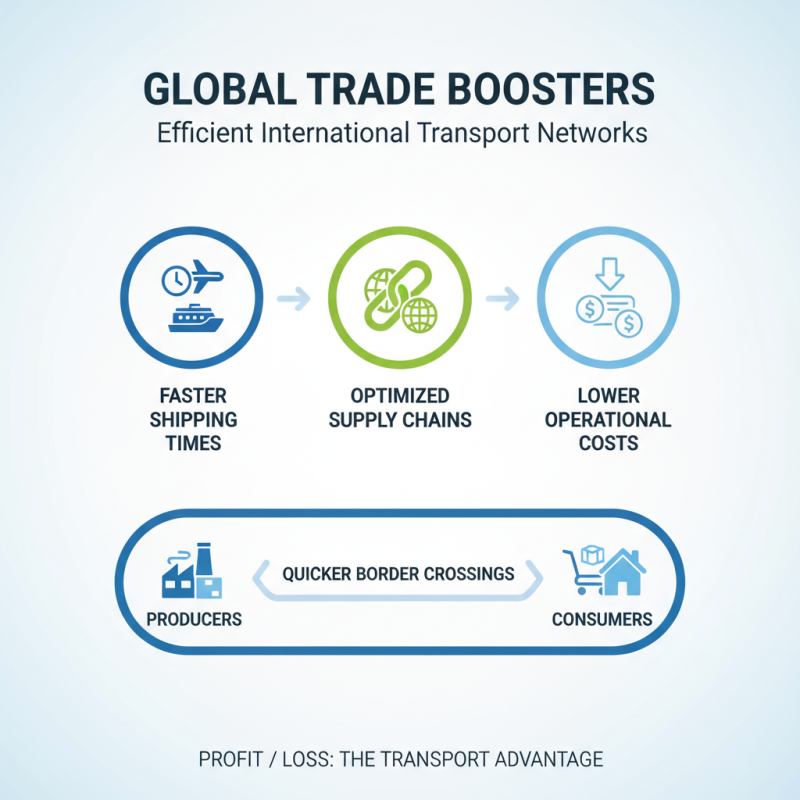
Efficient international transport networks are vital for global trade. They reduce shipping times, enhance supply chain management, and lower operational costs. Goods travel faster across borders, connecting producers and consumers more effectively. A well-organized transport system can mean the difference between profit and loss for businesses.
However, not all transport networks are created equal. Some regions face significant infrastructure challenges. For instance, delays at ports or poor road conditions can hinder trade. These inefficiencies can lead to increased costs. Companies may rethink their logistics strategies as a result. Often, they look for alternative routes that might not be the most economical.
Despite the need for efficiency, environmental concerns arise. The carbon footprint of international transport is considerable. Balancing economic benefits and environmental impacts is crucial. There must be investment in sustainable transport options. Ultimately, finding the right balance is an ongoing challenge in the quest for better global trade.
Future Trends in International Transport and Their Implications for Trade
International transport is rapidly evolving. Technology, sustainability, and globalization shape future trends. These changes impact trade dynamics significantly. For example, advancements in logistics tech enhance efficiency.
Drones and autonomous vehicles promise quicker deliveries. However, integrating these innovations poses challenges. Regulatory frameworks struggle to keep pace with technological growth.
Sustainability is another key trend. Many companies focus on reducing their carbon footprints. Green shipping methods are emerging. But transitioning to eco-friendly practices can be costly. Some businesses face difficulties balancing cost and sustainability. The emphasis on local sourcing also creates complexities. It may shift traditional trade routes and relationships.
Adapting to these trends is essential for global trade. Companies need agility to respond to shifts in logistics and consumer behavior. The future of international transport may be uncertain. However, it offers opportunities alongside challenges. Embracing change requires careful planning and reflection on current practices.