China Top 10 PU Spray Foam Insulation Manufacturers?
China’s PU Spray Foam Insulation market includes large chemical producers, specialized applicators, and export-focused manufacturers. Their products serve roofs, wall cavities, cold-storage rooms, industrial buildings, and energy-efficient homes. However, a polished website does not prove consistent foam quality.
This guide examines China’s top manufacturers through practical and technical criteria. These include raw-material control, foam density, adhesion, dimensional stability, fire-performance documentation, production capacity, and technical support. Batch traceability matters. So does curing behavior on a cold construction site. A foam that looks uniform in a sample panel may perform differently under humidity, temperature changes, or poor substrate preparation.
Building scientist Joseph Lstiburek has stated, “A building enclosure is a system.” That principle is essential when evaluating PU Spray Foam Insulation. Insulation alone cannot correct uncontrolled air leakage, trapped moisture, or weak installation practices. The best manufacturers explain these limitations clearly. They provide application guidance, safety documentation, test reports, and realistic performance data.
This ranking should not be treated as permanent. Product formulas, certifications, factory capacity, and export service can change. Some companies communicate technical details better than others, but communication is not the same as proven performance. Independent testing remains valuable.
Look beyond price. Compare spray yield, closed-cell or open-cell structure, adhesion, curing time, packaging, and after-sales support. Small differences can affect an entire roof deck. The evaluation may still contain judgment calls, especially where public data is incomplete. That is worth acknowledging. Reliable decisions require both documented evidence and careful project-specific review.
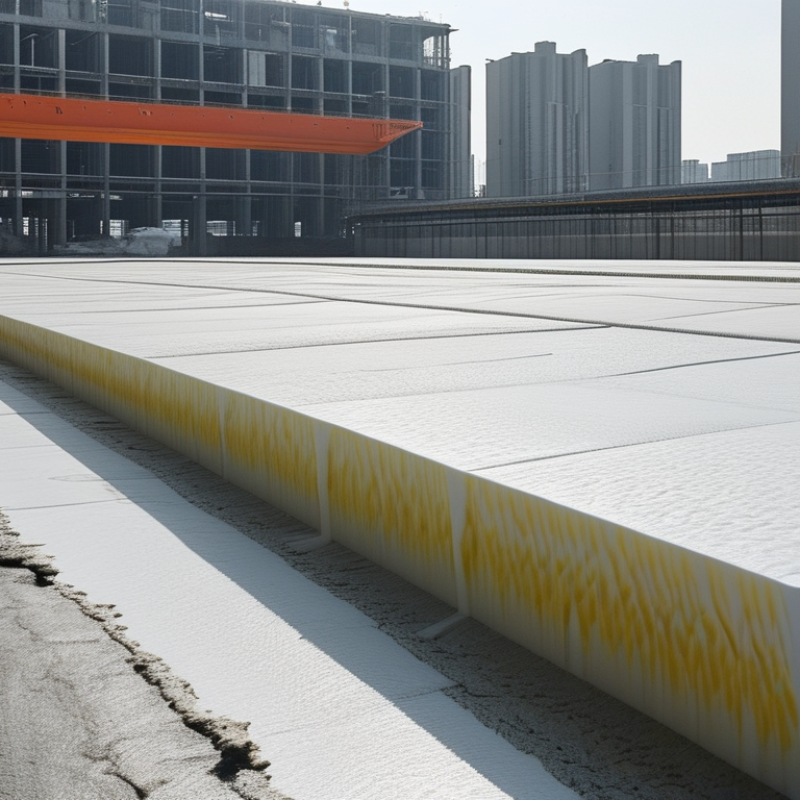
PU Spray Foam Basics: Closed-Cell R-6–7 and Open-Cell R-3.5–4 per Inch
PU spray foam insulation is commonly divided into closed-cell and open-cell types. Their performance differs significantly.
Closed-cell foam typically delivers an R-value of about 6–7 per inch. Its dense structure resists water movement and adds useful rigidity to walls, roofs, and metal buildings. A two-inch application can provide substantial thermal resistance, but thickness alone does not guarantee good performance. Voids, poor adhesion, and uneven spraying can reduce the result.
Open-cell foam usually provides around R-3.5–4 per inch. It expands more generously and helps reduce air leakage inside framed cavities. Its softer texture suits interior walls and roof assemblies where moisture exposure is controlled. It is not a complete substitute for a dedicated vapor control layer in every climate.
Site conditions matter.
Experienced installers check substrate temperature, surface moisture, ventilation, and chemical temperature before spraying. Manufacturers should provide tested R-value data, density information, application limits, and clear technical guidance. Independent documentation is more reliable than a simple sales claim.
A practical comparison should also consider thickness, fire performance, dimensional stability, and long-term moisture management. For example, a thicker open-cell layer may match the thermal value of a thinner closed-cell layer, yet the assemblies will behave differently. This is where quick comparisons become misleading.
Some project decisions remain imperfect. R-values may decline slightly over time, and field results rarely match laboratory conditions exactly. Careful inspection still matters more than attractive numbers.
Key Selection Metrics: Density, R-Value, Yield, GWP, and ISO 9001
Choosing among China’s top 10 PU spray foam insulation manufacturers requires more than comparing catalog prices. Density is a useful starting point because it affects stability, strength, and installed coverage. Ask for batch-specific density reports, not only product-range averages. A number alone is not enough. Measure it carefully.
R-value should be checked per inch and under a stated test method. A higher declared R-value may look attractive, yet poor mixing, cold substrates, or uneven passes can reduce actual performance. Yield also needs careful interpretation. Compare theoretical board-foot yield with documented field yield at defined temperatures and pressures. A kit promising 600 board feet may perform differently on a windy jobsite. Temperature matters greatly.
GWP deserves equal attention. Request the blowing-agent type, product data, and verified environmental declarations. Do not treat a low-GWP claim as proof of lower total impact; service life and wasted material matter too. ISO 9001 certification shows a controlled quality-management system, but it does not guarantee insulation performance. Check certificate scope, audit validity, traceability, technical support, and complaint handling. I would also inspect cured-cell structure from production samples. This step is often skipped. That omission can be costly. A reliable supplier should explain test limits openly, provide current documents, and accept independent verification before shipment.
China Top 10 PU Spray Foam Insulation Manufacturers? – Key Selection Metrics: Density, R-Value, Yield, GWP, and ISO 9001
| Rank | Anonymous Manufacturer Profile | Typical Foam Type | Core Density
(kg/m³) | Thermal Resistance
(R-value per inch) | Practical Yield
(m³ per 100 kg system) | Estimated Product GWP
(kg CO₂e/kg) | ISO 9001 Evidence | Technical Selection Score |
| 1 | Manufacturer Profile A | Closed-cell spray polyurethane foam | 35–40 | 6.0–7.0 | 2.35–2.65 | 1.8–3.5 | Certificate available | 94/100 |
| 2 | Manufacturer Profile B | Closed-cell spray polyurethane foam | 38–45 | 5.8–6.8 | 2.20–2.50 | 2.0–3.8 | Certificate available | 92/100 |
| 3 | Manufacturer Profile C | Open-cell spray polyurethane foam | 8–12 | 3.5–4.0 | 7.2–9.0 | 0.8–1.8 | Certificate available | 89/100 |
| 4 | Manufacturer Profile D | Closed-cell spray polyurethane foam | 32–38 | 5.8–6.7 | 2.45–2.80 | 2.2–4.0 | Verify current certificate | 87/100 |
| 5 | Manufacturer Profile E | Open-cell spray polyurethane foam | 9–14 | 3.6–4.2 | 6.5–8.3 | 0.9–2.0 | Certificate available | 85/100 |
| 6 | Manufacturer Profile F | Closed-cell spray polyurethane foam | 40–48 | 5.5–6.5 | 2.05–2.35 | 1.6–3.2 | Verify current certificate | 83/100 |
| 7 | Manufacturer Profile G | Open-cell spray polyurethane foam | 10–16 | 3.5–4.0 | 5.8–7.6 | 1.0–2.2 | Certificate available | 81/100 |
| 8 | Manufacturer Profile H | Closed-cell spray polyurethane foam | 36–44 | 5.6–6.6 | 2.15–2.55 | 2.5–4.5 | Verify current certificate | 79/100 |
| 9 | Manufacturer Profile I | Open-cell spray polyurethane foam | 8–13 | 3.4–3.9 | 6.8–8.8 | 1.1–2.4 | Verify current certificate | 77/100 |
| 10 | Manufacturer Profile J | Closed-cell spray polyurethane foam | 34–42 | 5.5–6.4 | 2.25–2.60 | 3.0–5.0 | Verify current certificate | 74/100 |
Evaluation note: The figures are anonymous screening benchmarks based on commonly published technical ranges for spray polyurethane foam systems. R-value varies with test method, temperature, aging, and thickness. Yield depends on substrate, ambient conditions, installation technique, and system temperature. GWP must be confirmed from a current product-specific EPD or verified life-cycle assessment. ISO 9001 status should be checked against the current certificate scope, issuing body, and expiration date before procurement.
China’s Top 10 PU Foam Manufacturers: Products, Capacity, and Markets
China’s top ten PU foam manufacturers are best assessed by products, capacity, and market reach. Public disclosures show strong coverage across spray foam, rigid panels, molded parts, flexible foam, and insulation systems. Several producers report annual capacities from tens of thousands to above 100,000 tonnes, although figures may combine plants, subsidiaries, and trading operations. That detail matters.
Grand View Research valued the global polyurethane foam market at about USD 50 billion in 2023 and expects continued growth through 2030. China remains a major production base, supported by construction insulation, cold-chain equipment, appliances, furniture, and automotive demand. The leading ten suppliers usually serve domestic contractors first, then export to Southeast Asia, Europe, the Middle East, and North America. Some offer ISO-certified production, fire-performance testing, custom densities, and technical installation support. Products may include closed-cell spray foam, PIR or PUR boards, elastomeric foam, and appliance-grade molded components.
MarketsandMarkets identifies energy efficiency and building renovation as important growth drivers for polyurethane insulation. Yet capacity alone is not enough. A factory with large output may lack stable raw-material control, application training, or reliable export documentation. Buyers should compare declared capacity with audited production, test reports, delivery records, and local compliance requirements. The ranking is therefore imperfect. Public data is uneven, and some manufacturers disclose sales volume rather than usable production capacity. Seasonal construction demand can also distort annual comparisons.
This manufacturer-neutral comparison shows the typical technical profile of the two main spray polyurethane foam product categories supplied by the Chinese insulation market. Closed-cell foam generally provides higher thermal resistance and density, while open-cell foam is lighter and commonly used for interior air-sealing and sound-control applications. Values are representative industry benchmarks; actual specifications vary by formulation, climate, installation method, and applicable building standards.
Reference basis: U.S. Department of Energy guidance commonly cites approximately R-3.5 per inch for open-cell spray foam and R-6.5 per inch for closed-cell spray foam.
Compliance Checklist: ASTM C1029, EN 14315, ISO 4898, and Fire Ratings
When evaluating China’s top ten PU spray foam insulation manufacturers, begin with a document-based compliance check. Request the exact ASTM C1029 edition, product type, density range, and intended application. ASTM C1029 evidence should match the foam supplied, not a similar product. Read the scope carefully. A credible manufacturer provides batch records, technical data sheets, and independent laboratory reports.
For European projects, check EN 14315 documentation for declared thermal performance, dimensional stability, water absorption, and reaction-to-fire classification. ISO 4898 can support identification of rigid cellular plastic insulation characteristics, but it should not replace project-specific testing. Confirm test conditions, specimen thickness, aging procedures, and report validity. Small gaps matter. Store samples from production batches when possible. This creates traceability during site inspections.
Fire performance needs extra caution. Ask whether the rating applies to the foam, a coating system, or the complete wall and roof assembly. Review flame spread, smoke production, and burning droplets where the applicable code requires them. Verify installation thickness, substrate temperature, moisture levels, and spray-pass limits. These details affect real performance. An experienced technical team should provide application records, installer training evidence, and corrective procedures for defective areas. Paperwork matters. One practical weakness is that published data may look complete while omitting aging or adhesion results. Independent verification remains necessary, especially for cold storage, roofing, and high-occupancy buildings. Compliance should be checked against the destination market’s current regulations, not assumed from a certificate alone.
